Time Vibe presents

Seiko Prospex Speedtimer
Solar Chronograph
HBJ003P1 & HBJ002P1

The latest chapter in a chronograph lineage that began in 1969.

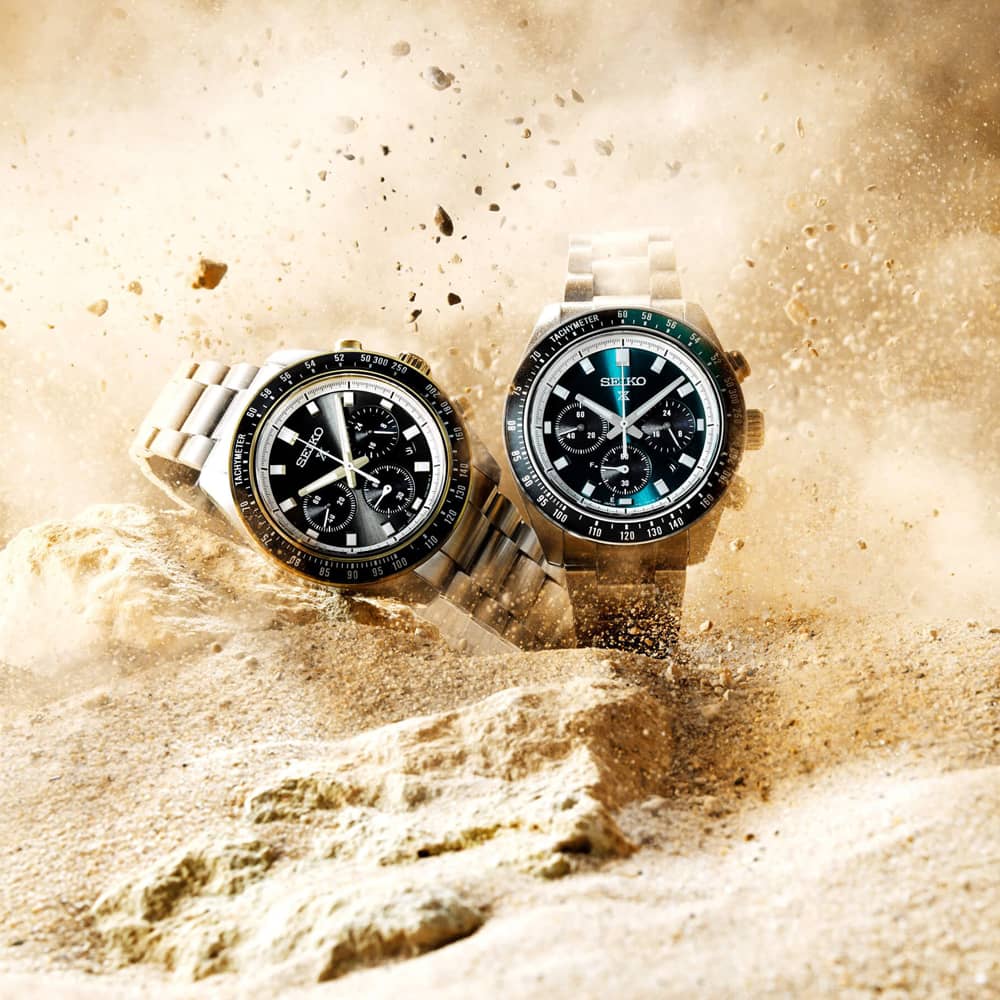
The Seiko Speedtimer is one of the most significant names in chronograph history. In 1969, it arrived as the world’s first automatic chronograph with a column wheel and vertical clutch — a technical achievement that reshaped what a timing wristwatch could be. In 2021, Seiko revived the name for a new family of solar-powered chronographs within the Prospex collection, pairing the design language of those original 1960s and 1970s Speedtimers with the Caliber V192 solar movement. These two models — the HBJ003P1 in racing green and the HBJ002P1 in champagne grey — are the newest references in that Solar Chronograph line. They carry the 41.4 mm case, the bi-colour tachymeter bezel, the curved sapphire crystal, and the motorsport-inspired colourways that define the current generation. Powered by light. Accurate to ±15 seconds per month. Six months of reserve on a full charge. The Speedtimer chronograph, refined once more.

Why a Speedtimer Solar Chronograph?

The Speedtimer name now spans a broad collection within Seiko’s Prospex family — mechanical chronographs, GPS solar chronographs, countdown timers, and solar chronographs. Not all Speedtimers are chronographs, and not all of them run on light. The Solar Chronograph models, powered by Caliber V192, are the line that brought the Speedtimer name back for a new generation of wearers. They are the core of the collection: accessible, reliable, and built to be worn every day without the rituals that come with a mechanical movement or the battery changes that come with conventional quartz.

The V192 is a solar-powered quartz chronograph movement that converts any light source — natural or artificial — into the energy it needs to run. It drives a 60-minute chronograph measuring in one-fifth-of-a-second increments, a 24-hour hand, a small seconds display, a date window, and a power reserve indicator that shows charge status at the press of a button. The subdials themselves are translucent, allowing light to pass through to the solar cell beneath — a functional detail that also gives the dials their distinctive dark, recessed character. Accuracy is rated at ±15 seconds per month. A full charge sustains the watch for approximately six months in total darkness. In practical terms, this is a chronograph that asks nothing from you: give it light, and it keeps running.

The case surrounding that movement is built for a sports chronograph. Stainless steel, 41.4 mm in diameter, 13 mm thick, with a lug-to-lug of 45.9 mm — proportions that deliver presence on the wrist without crossing into the unwieldy. A curved sapphire crystal with anti-reflective coating on its inner surface sits over the dial. Water resistance is rated at 10 bar, backed by a screw-in caseback. Magnetic resistance holds at 4,800 A/m. All twelve indices and the hour and minute hands are coated with Seiko’s LumiBrite for legibility after dark. The stainless steel bracelet tapers from the lugs to a three-fold clasp with push-button release. These are the details that make the Speedtimer Solar Chronograph what it is: a genuinely functional timing instrument that you never have to think about maintaining.

The Speedtimer chronograph: from 1969 to today

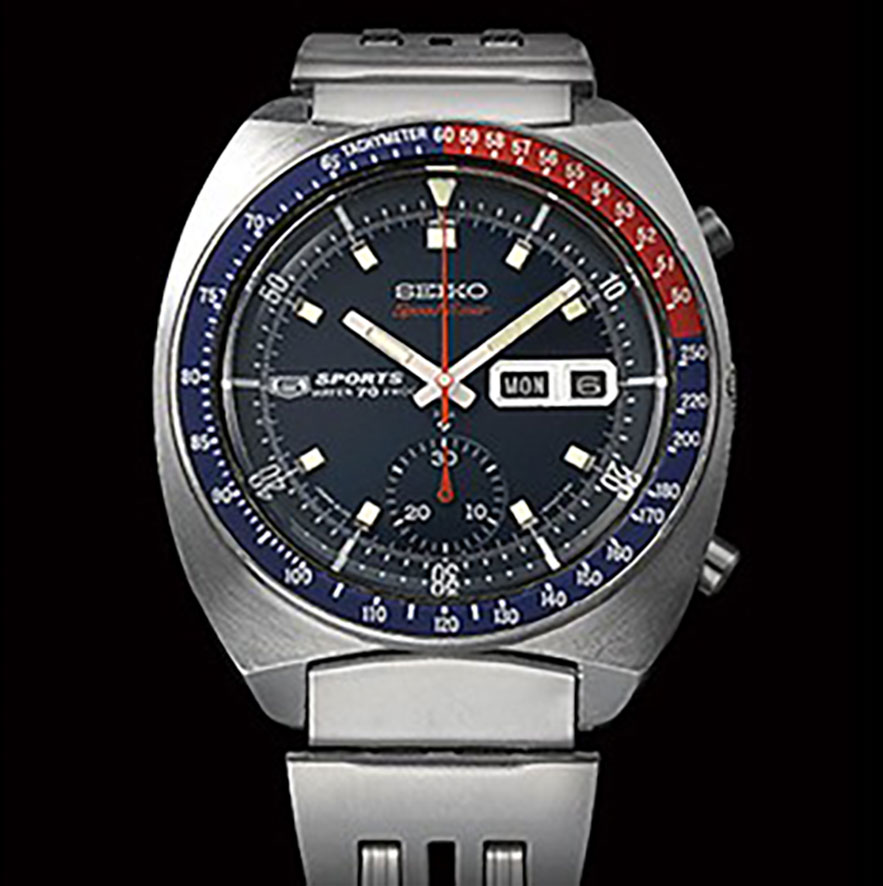
1969 Seiko Speedtimer original

Before the Speedtimer existed as a wristwatch, Seiko was already defining precision timing for international sport. In the 1960s, the company supplied a new generation of stopwatches built around its innovative “heart-shaped cam” mechanism — a design that delivered accuracy levels previously considered unachievable by manual timing devices. International sports federations endorsed the equipment, and Seiko timing instruments captured elapsed time at some of the world’s most prestigious events throughout the decade.

In 1969, that expertise moved to the wrist. Seiko introduced the Speedtimer, powered by Caliber 6139 — the world’s first automatic chronograph with both a column wheel and a vertical clutch. The column wheel governs the start, stop, and reset sequence with clean mechanical precision. The vertical clutch engages the chronograph without the stutter that horizontal-clutch designs can produce. Together, they set a benchmark that remains fundamental to high-end chronograph movements today. Through the 1970s, the Speedtimer line grew with bold designs and colourful dials that reflected the era’s motorsport culture — two-tone bezels, tachymeter scales, contrasting subdials. The Speedtimer became the name Seiko put on its most purposeful chronographs.

Decades later, in 2021, Seiko revived the Speedtimer name for a new line of chronographs within the Prospex collection. The first Solar Chronograph references — the SSC813 and its siblings — ran the Caliber V192 in a 39 mm case with sandblast-finished dials and design cues pulled directly from the 1960s and 1970s archive. In 2022, a second generation arrived: the SSC911, SSC913, and SSC915 moved to a 41.4 mm case, introduced curved sapphire glass, sunray-finished dials, and the bi-colour aluminium tachymeter bezels that gave the Speedtimer Solar Chronograph its current identity. Subsequent references added motorsport-themed colourways — the SSC939, SSC941, and SSC943 in 2024 — and in early 2026 a new set of 39 mm “Youngtimer” models refreshed the smaller-cased end of the line. Alongside the solar models, the Speedtimer family expanded into mechanical chronographs with Caliber 8R46, GPS solar chronographs, and most recently the countdown-timer three-handers that carry the Speedtimer name without a chronograph function at all. The HBJ series — announced in September 2026 — represents the newest generation of the 41.4 mm Solar Chronograph, carrying refined tachymeter bezel markings and the “Classic Motorsports” colourways that connect these watches directly to the racing heritage the Speedtimer name was built on.

The HBJ generation

The HBJ series picks up where the SSC911 generation left off. The 41.4 mm stainless steel case, the Caliber V192 solar movement, the curved sapphire crystal, the 10-bar water resistance — the platform that has defined the larger-cased Speedtimer Solar Chronograph since 2022 remains intact. What has changed is the bezel. The tachymeter scale on the bi-colour aluminium insert carries revised markings, with the highest values on the old scale replaced by additional graduations across the range. Seiko has not published the reasoning behind the revision, but the effect is a denser, more detailed speed-reading scale — a refinement aimed at the function the tachymeter was always meant to serve.

The design theme for the HBJ references is “Classic Motorsports.” The four models in the series — HBJ001 through HBJ004 — each take a different colourway inspired by the palette of racing cars from the 1960s and 1970s, the same era that produced the original Speedtimer chronographs. Hour and minute hands echo the shapes found on the 1969 original. The chronograph seconds scale around the dial ring and the bi-colour tachymeter bezel are Speedtimer hallmarks carried forward from the archive. It is the same design vocabulary the Solar Chronograph line has spoken since 2021 — now with the colours turned up.

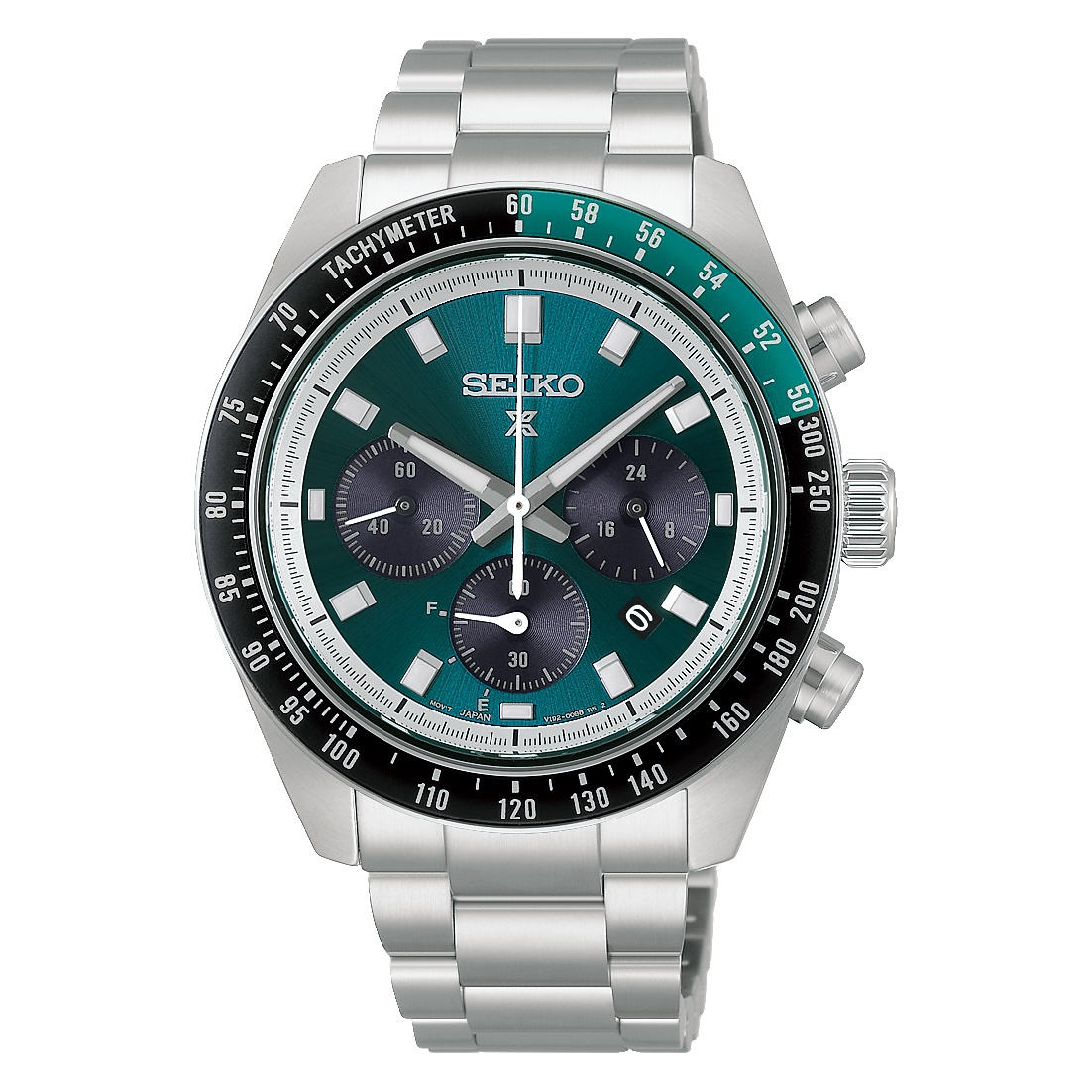
Seiko Prospex Speedtimer Solar Chronograph HBJ003P1

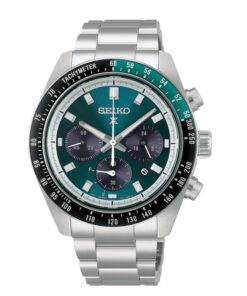
The HBJ003P1 is the Speedtimer Solar Chronograph in racing green. The colour scheme is drawn from the palette of vintage racing cars of the 1960s and 1970s — a direct connection to the era that produced the original Speedtimer chronographs. The green dial is offset by dark, translucent chronograph subdials that let light through to the solar cell while providing immediate visual separation between running time and elapsed time. The hour and minute hands echo the shapes of the 1969 original, and the chronograph seconds scale around the dial ring sits beneath a bi-colour aluminium bezel with tachymeter markings — both carried over from the Speedtimer archive. Twelve LumiBrite-treated indices ensure the watch remains legible when the light fades. The 41.4 mm stainless steel case paired with a tapered bracelet sits with the presence a sports chronograph should have, without crossing into territory that makes daily wear a compromise.

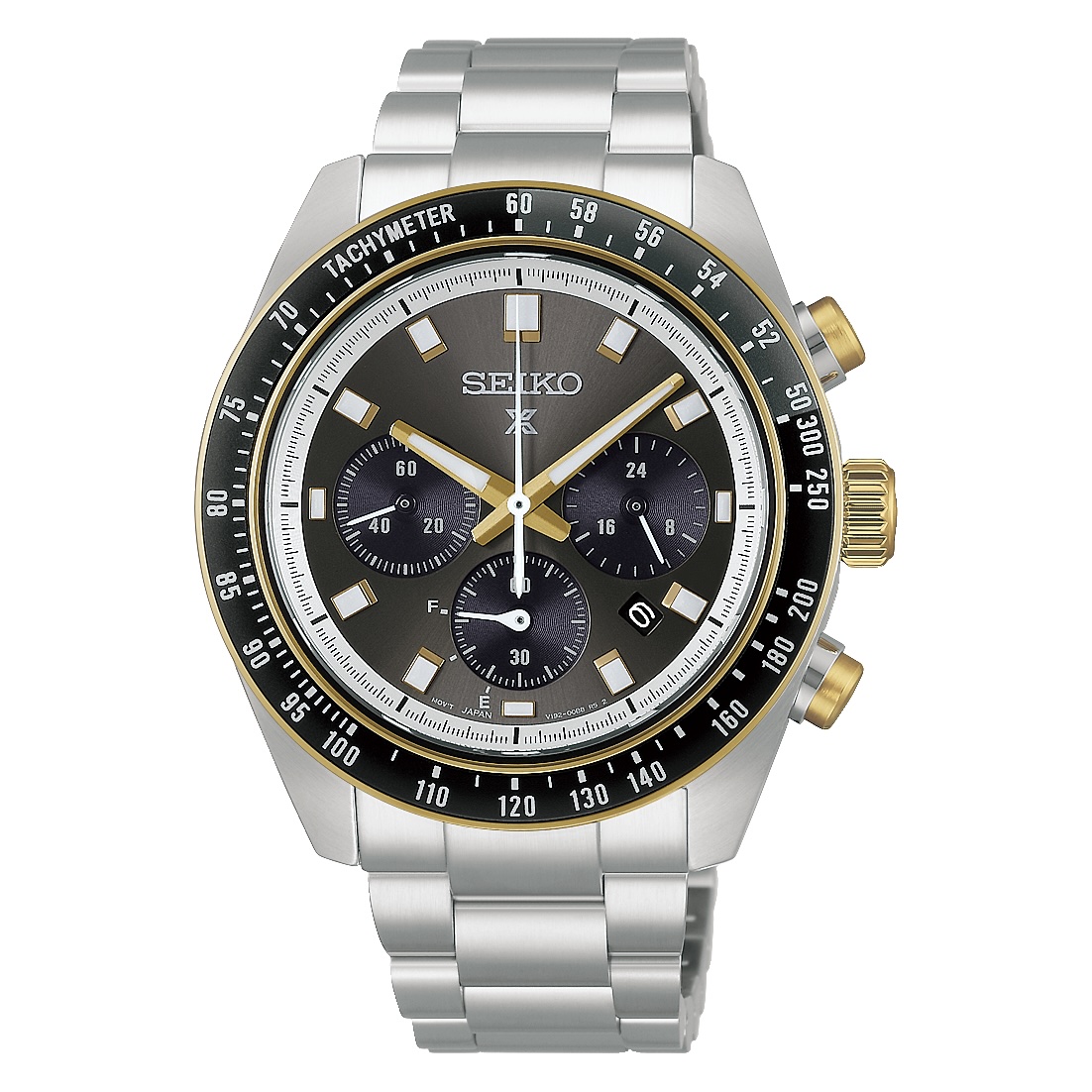
Seiko Prospex Speedtimer Solar Chronograph HBJ002P1

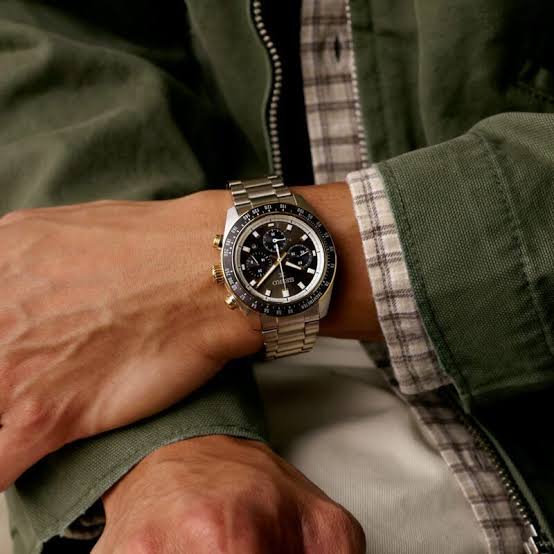
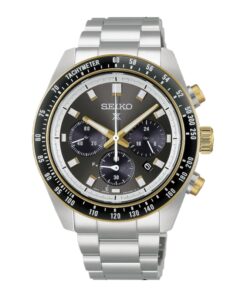
The HBJ002P1 is the same Solar Chronograph dressed in a grey “Champagne Shower” dial with gold-tone accents. Where the green model speaks to the racing liveries of the period, this variant draws from the warmth of a vintage dashboard — grey tones catching gold in the light, refined but unmistakably connected to the same motorsport roots. The two-tone aluminium tachymeter bezel complements the dial’s tone, and the gold-accented hands and markers give the watch a different character from its green sibling without altering anything underneath. The Caliber V192 solar movement, the 41.4 mm case at 13 mm thick, the curved sapphire crystal, the 10-bar water resistance, the 168-gram weight on bracelet — all identical. Functionally, the HBJ002P1 and HBJ003P1 are the same chronograph. The difference is palette, and the difference is enough.

Specifications

Reference: HBJ003P1
Series: Prospex Speedtimer Solar Chronograph
Movement: Caliber V192 (solar quartz)
Accuracy: ±15 seconds per month
Power reserve: approx. 6 months (when fully charged)
Functions: date, 24-hour hand, small seconds, chronograph up to 60 minutes in 1/5-second increments, power reserve indicator, overcharge prevention
Case material: stainless steel
Case size: 41.4 mm × 13.0 mm
Lug-to-lug: 45.9 mm
Crystal: curved sapphire crystal (anti-reflective coating on inner surface)
Caseback: screw-in
Bezel: two-tone aluminium, tachymeter scale
Water resistance: 10 bar (100 m)
Magnetic resistance: 4,800 A/m
Lume: LumiBrite on hands and indices
Dial colour: green
Bracelet: stainless steel, three-fold clasp with push-button release
Lug width: 21 mm
Weight: 168 g

Reference: HBJ002P1
Series: Prospex Speedtimer Solar Chronograph
Movement: Caliber V192 (solar quartz)
Accuracy: ±15 seconds per month
Power reserve: approx. 6 months (when fully charged)
Functions: date, 24-hour hand, small seconds, chronograph up to 60 minutes in 1/5-second increments, power reserve indicator, overcharge prevention
Case material: stainless steel
Case size: 41.4 mm × 13.0 mm
Lug-to-lug: 45.9 mm
Crystal: curved sapphire crystal (anti-reflective coating on inner surface)
Caseback: screw-in
Bezel: two-tone aluminium, tachymeter scale
Water resistance: 10 bar (100 m)
Magnetic resistance: 4,800 A/m
Lume: LumiBrite on hands and indices
Dial colour: grey (Champagne Shower) with gold-tone accents
Bracelet: stainless steel, three-fold clasp with push-button release
Lug width: 21 mm
Weight: 168 g

A Chronograph Worth Wearing

The Speedtimer Solar Chronograph has been part of the Prospex collection since 2021, and each generation has sharpened what the line does best: deliver a real chronograph — with the design heritage of Seiko’s most significant timing watches — in a format that asks nothing from the wearer. No batteries. No winding. No servicing schedule. Just a watch that runs on light, measures elapsed time to a fifth of a second, and connects to a chronograph lineage that stretches back to 1969 and the Caliber 6139. The HBJ003P1 and HBJ002P1 are the newest expression of that idea — the same proven platform, the same solar Caliber V192, with the “Classic Motorsports” colourways and refined tachymeter markings that bring the design closer to the archive it draws from. In green or in grey, the choice is yours.

All Seiko Speetimers at Time Vibe

All Seiko watches at Timevibe.

Ships worldwide.

Browse All Seiko Models